The race-and-politics research hub: historical institutions, contemporary claims, policing, antiracism, and source audits. The working arguments below are preserved rather than silently converted into verified findings.
Claims and denominators
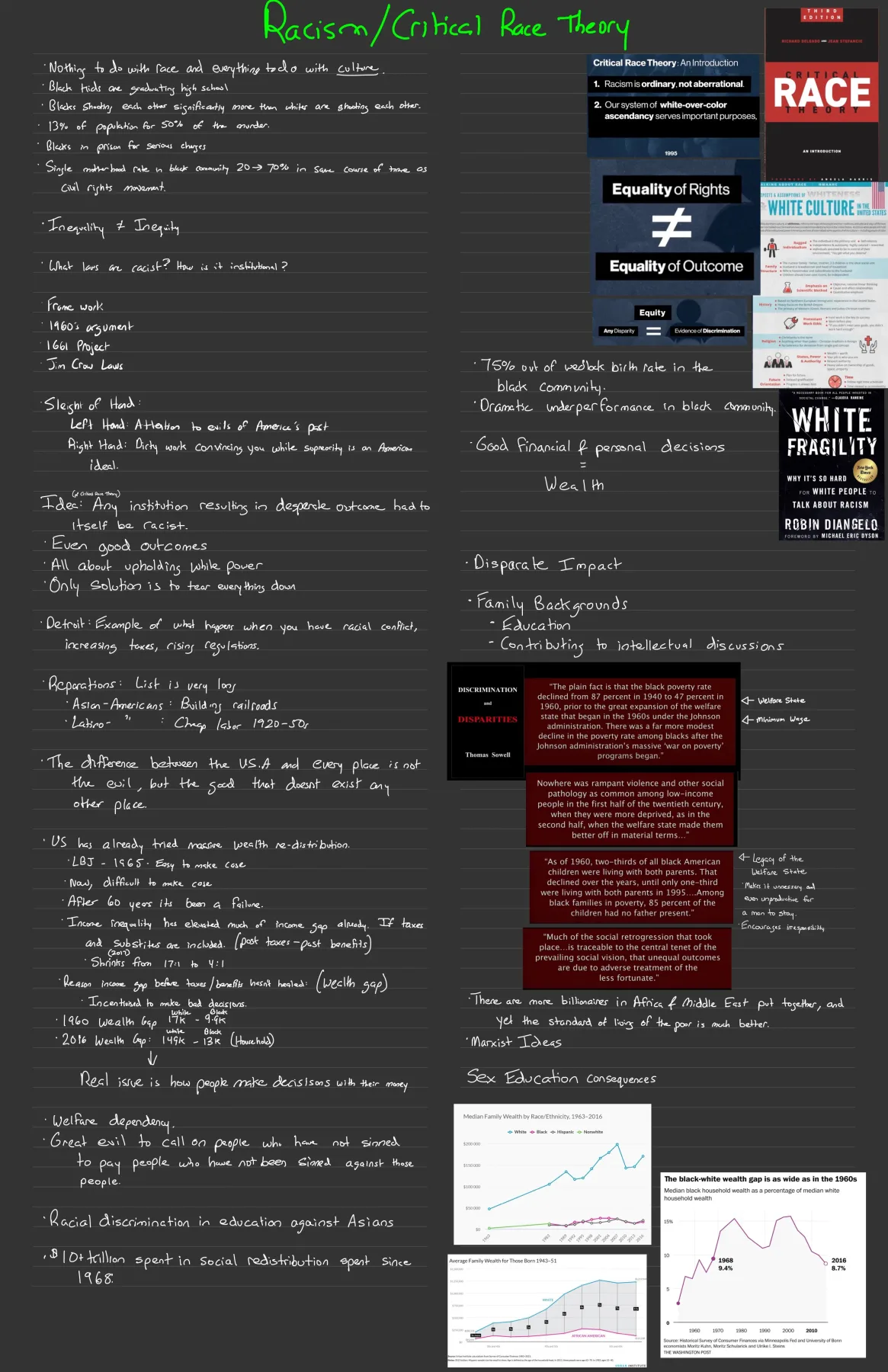
The original scratch notes include broad claims about family structure, crime, income, and historical causation. Before reuse, distinguish a measured disparity from its proposed explanation and check date, population, unit, and primary source. Basic Logic Youtube Channel Research explicitly tracks which video claims have and have not been fact-checked.
Basic Logic Youtube Channel Research indexes a 104-video, cross-topic research corpus now filed in 60.3.12 - Source Audits & Media. Its hub records the current dossier, transcript, and inventory-only statuses; race-related videos are a subject route, not the whole project.
How race relations GOT WORSE and dropped precipitously in 2013
Black males received sentences 13.4 percent longer, and Hispanic males received sentences 11.2 percent longer, than White males
Hispanic females received sentences 27.8 percent longer than White females, while Other race females received sentences 10.0 percent shorter.
Black males were 23.4 percent less likely, and Hispanic males were 26.6 percent less likely, to receive a probationary sentence compared to White males
Similar trends were observed among females, with Black and Hispanic females less likely to receive a probation sentence than White females (11.2% percent less likely and 29.7% less likely, respectively).
The sentencing differences were less pronounced when the analyses focused solely on cases in which a sentence of imprisonment was imposed, which comprise 94 percent of all cases sentenced during the five-year study period.
Focusing solely on these cases, Black males received lengths of incarceration 4.7 percent longer, and Hispanic male received lengths of incarceration 1.9 percent longer, than White males.
There was little difference among females receiving a sentence of imprisonment. The only statistically significant difference in the length of imprisonment among females was among Hispanic females, who received lengths of incarceration 5.9 percent shorter than White females.
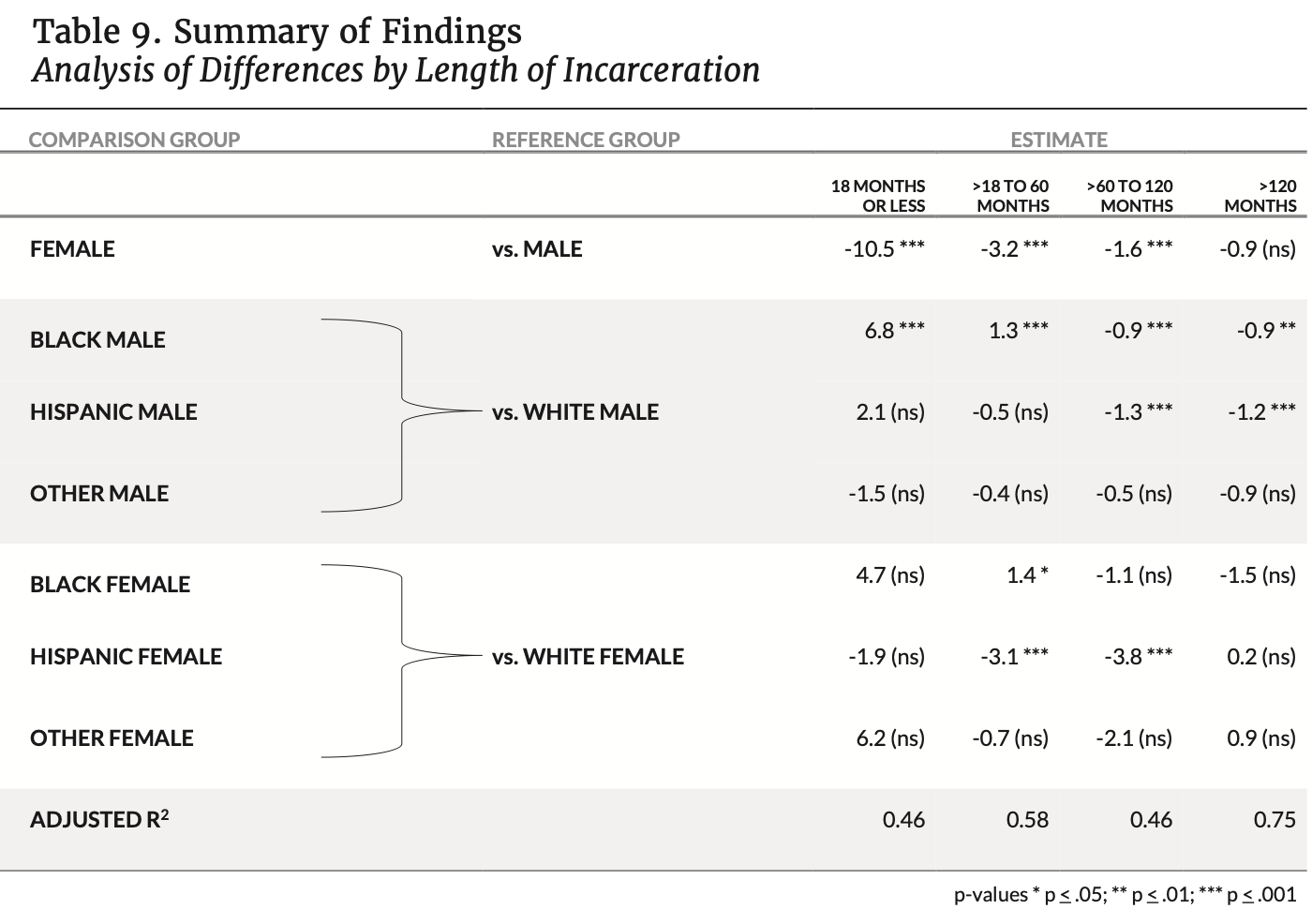
Among individuals sentenced to 18 months or less incarceration, Black males received lengths of incarceration 6.8 percent longer than White males. The difference narrowed to 1.3 percent for individuals who received sentences of greater than 18 months to 60 months; but for sentences longer than 60 months, Black males received lengths of incarceration approximately one percent shorter than White males. Few differences were statistically significant when comparing sentences for females.
When examining all sentences imposed, females received sentences 29.2 percent shorter than males. Females of all races were 39.6 percent more likely to receive a probation sentence than males. When examining only sentences of incarceration, females received lengths of incarceration 11.3 percent shorter than males.
In particular, the likelihood of receiving a probationary sentence varied substantially by race. Black males were 23.4 percent less likely, and Hispanic males were 26.6 percent less likely, to receive a probationary sentence compared to White males, after controlling for all other factors. Although probationary sentences account for only six percent of sentences imposed during the five-year period studied, they significantly impact the study of disparity.
As part of its separate data collection efforts, the Commission has continued to collect extensive data regarding the criminal history of sentenced individuals. Because the Commission now has detailed criminal history information for all individuals sentenced in the five fiscal years discussed in this report, the Commission retested whether an individual’s prior violence is associated with the sentence imposed. The inclusion of a variable for prior violence was found to be statistically significant and improved the overall model fit to the data. Therefore, the prior violence variable was included in the final model.
Compared to individuals sentenced federally with less than a high school education, those who graduated from high school were 17.4% more likely to receive a probation-only sentence.
The Commission found that among individuals sentenced for a drug trafficking offense, females were 50.8 percent more likely to receive a probation-only sentence than males. Further, females sentenced to incarceration for a drug trafficking offense received sentences 12.2 percent shorter than males sentenced for such an offense.
The Commission found that females sentenced for a firearms offense were approximately 46.1 percent more likely to receive a probation-only sentence as compared to males sentenced for such an offense. Further, among individuals sentenced to incarceration for a firearms offense, females received sentences that were 13.1 percent shorter than males. However, among females, there was no statistically significant association between race and the likelihood of receiving a probation-only sentence or in the length of incarceration imposed.
Based on the 2023 Demographic Differences in Federal Sentencing Report, here is a summary of key results: Sentencing Differences Across Demographics1. Sentence Length:
• Black males received sentences 13.4% longer than White males.
• Hispanic males received sentences 11.2% longer than White males.• Hispanic females received sentences 27.8% longer than White females.
• Other race females received sentences 10% shorter than White females.2. Likelihood of Receiving Probation-Only Sentences:
• Black males were 23.4% less likely and Hispanic males were 26.6% less likely to receive probation compared to White males.
• Among females, Black females were 11.2% less likely and Hispanic females were 29.7% less likely to receive probation than White females.3. Length of Incarceration (focusing on those who received imprisonment):
• Black males received incarceration sentences 4.7% longer than White males.
• Hispanic males received sentences 1.9% longer than White males.
• Hispanic females received sentences 5.9% shorter than White females.4. Sentencing Length Variations Based on Sentence Duration:
• For sentences of 18 months or less, Black males received incarceration 6.8% longer than White males.
• For sentences of greater than 18 to 60 months, Black males received sentences 1.3% longer than White males.
• For sentences longer than 60 months, Black males received sentences about 1% shorter than White males.5. Gender Differences:
• Females across all races received sentences 29.2% shorter than males.
• Females were 39.6% more likely to receive probation than males.
• When incarcerated, females received sentences 11.3% shorter than males.