📓 In your handwritten notebooks
- March 21 – June 9 2026, pp. 185 — Argumentation · Christianity → open PDF p201 (file not included in this release)
Index: Personal Journal
The front page for everything in this folder.
Start Here
The fastest way to get oriented.
- 🎯 The workflow, end to end — Debate Playbook (MOC) (research → organize → present → attack → defend → close)
- ✍️ Written debate, from ancient disputation to modern point–counterpoint — Written Debate - History, Famous Exchanges, and a Practical Method · template: Written Debate Document
- 🌳 Map the argument before you argue it — Debate - Argument Tree (C / R / O / RR grammar)
- 🧱 What an argument is actually made of — Argument Structure · Argumentation Scheme
- 🚫 The fallacy reference — Logical Fallacies · Fallacies & Bad Faith (MOC)
- 🎓 The full course — Debate University Course · Critical Thinking
- 📚 The reading curriculum — Reading Track - Argumentation & Influence (nine phases: epistemic habits → critical thinking → formal logic → debate → rhetoric → storytelling → disinformation)
- 🗃️ Everything as a database — Argumentation.base (file not included in this release)
- 🎧 Ask the corpus — NotebookLM — Argumentation & Logic
The Sub-MOCs
Each tile is a map into one area of the folder.
The six-step operating procedure — research, case construction, presentation, attack, defense, and close — with the book sections backing each step.
What an argument is made of — premises and conclusions, deduction vs. induction, syllogisms, argument schemes, argument trees, and critical-thinking frameworks.
Formal and informal fallacies, the named bad-faith moves (“Lazy Gardener,” “Clown Mirror,” Gish gallop), and the biases that make them land.
Ethos/pathos/logos, delivery, humor, the rule of three, Verbal Judo, Socratic questioning, and the rhetorical strategies file.
How people actually form and defend beliefs — theory of mind, social incentives, cognitive bias, and why arguing to learn beats arguing to win.
The full shelf — every book note and PDF, plus the courses and video sources.
The Loop — Six Steps
The core operating procedure. Full detail in Debate Playbook (MOC).
| # | Step | Do this | Anchor |
|---|---|---|---|
| 0 | Frame | Nail the proposition, the stasis, and who carries the burden | Debate University Course > Proposition · Shifting The Burden (Fallacy) |
| 1 | Research | Homework on the claim and the opponent | Win Every Argument - Medhi Hasan > 15 DO YOUR HOMEWORK (Page 248) |
| 2 | Organize | Build the case, pick the evidence, tree it out | Debate - Argument Tree · The Practice of Argumentation - Effective Reasoning > Chapter 7: Case Construction (Page 172) |
| 3 | Present | Win the audience before you win the point | Presenting Your Case |
| 4 | Attack | Refute the argument, then the arguer — in that order | Attacking An Argument |
| 5 | Defend | Absorb, redirect, counterattack | Defending Your Case |
| 6 | Close | Land the grand finale | Win Every Argument - Medhi Hasan > 16 THE GRAND FINALE (Page 270) |
Areas by Topic
Anatomy of an Argument
- Argument Anatomy (MOC) — the full map
- Structure → Argument Structure · Argumentation Scheme · Debate - Argument Tree
- Method → Critical Thinking · Internal Critique · Socratic Questioning
- Edge cases → Soritès Paradox · Threshold Fallacy
- Cross-folder → Logic MOC · Logic & Reasoning (MOC)
Debate Craft
- Debate Playbook (MOC) — the six steps
- Written Debate - History, Famous Exchanges, and a Practical Method — history, canonical exchanges, oral/written comparison, protocol, rounds, and evaluation
- Written Debate Document — reusable fixed-round template for single-author, two-party, symposium, decision-brief, or adversarial-collaboration formats
- Debate University Course — the long-form course notes
- Debate Tactics · Debate · Presenting Your Case · Attacking An Argument · Defending Your Case
- Predictive Model — reading where the conversation is going
Fallacies & Bad Faith
- Fallacies & Bad Faith (MOC) — the full map
- Logical Fallacies — the master reference (formal + informal)
- Named moves → Debate Pervertry · Shifting The Burden (Fallacy) · Threshold Fallacy
- The substrate → Cognitive Bias
Rhetoric & Delivery
- Rhetoric & Persuasion (MOC) — the full map
- Rhetoric · Rhetorical Strategies · Rhetorical Triangle
- Verbal Judo — staying in control under hostility
- Cross-folder → Communication MOC · 60.17 Influence & Negotiation · Persuasion
Why People Believe Things
- Psychology of Belief (MOC) — the full map
- Theory of Mind · People and their Beliefs · Cognitive Bias
- Social Incentives Dictate Beliefs · Constellation of Beliefs · Humans are not Truth-Seeking Machines · Skeptics Rarely Are · Normative Confusion with Applied Positions · Aesthetic vs Function
- Argumentation & Influence NOTES — coercion, shame, and arguing to learn
Opponents & Case Studies
- Andrew Wilson — the presuppositionalist case file (rights, might-makes-right, the “Loop of Pain”)
- Debate - Argument Tree — worked example: Logic and God as Ground of Logic, built out C1–C2 with every reply
Reference Shelf
Book notes
- Win Every Argument - Medhi Hasan · The Practice of Argumentation - Effective Reasoning · Good Arguments · The Art of Deception · How to Win Every Argument - Madsen Pirie · A Rulebook for Arguments · Verbal Judo · Tactics - Gregory Koukl
- How to Have Impossible Conversations · On the Orator, Books 1–2
PDFs
- A Concise Introduction to Logic — Patrick J. Hurley.pdf (file not included in this release)
- A Rulebook for Arguments (Fifth Edition) — Anthony Weston.pdf (file not included in this release)
- A Systematic Theory of Argumentation- The pragma-dialectical — Frans H_ van Eemeren, Rob Grootendorst — 2003.pdf (file not included in this release)
- How to Win Every Argument - Madsen Pirie.pdf (file not included in this release)
- Logically Fallacious- The Ultimate Collection of Over 300 — Bennett, Bo.pdf (file not included in this release)
- Reason and Argument - Richard Feldman.pdf (file not included in this release)
- The Art of Deception - Nicholas Capaldi.pdf (file not included in this release)
- The Practice of Argumentation- Effective Reasoning in — 2019 (Annotated).pdf (file not included in this release)
- Win Every Argument — Mehdi Hasan.pdf (file not included in this release)
Tools
- Argumentation.base (file not included in this release) — database view of every note
- Written Debate Document — resolution, burdens, source rules, claim ledger, fixed rounds, synthesis, and rubric
- NotebookLM — Argumentation & Logic
- List of fallacies — Wikipedia · An Illustrated Book of Bad Arguments
Visual References
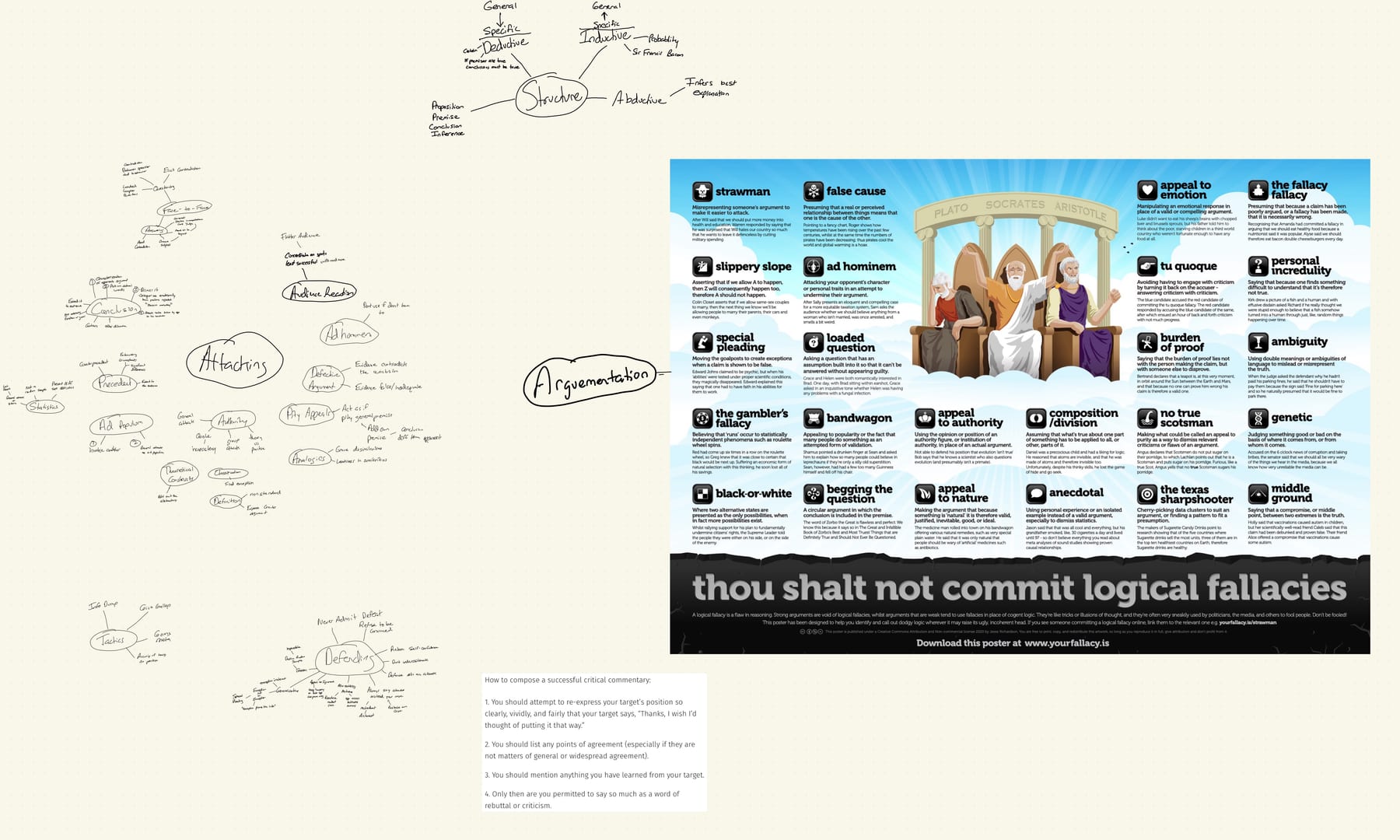
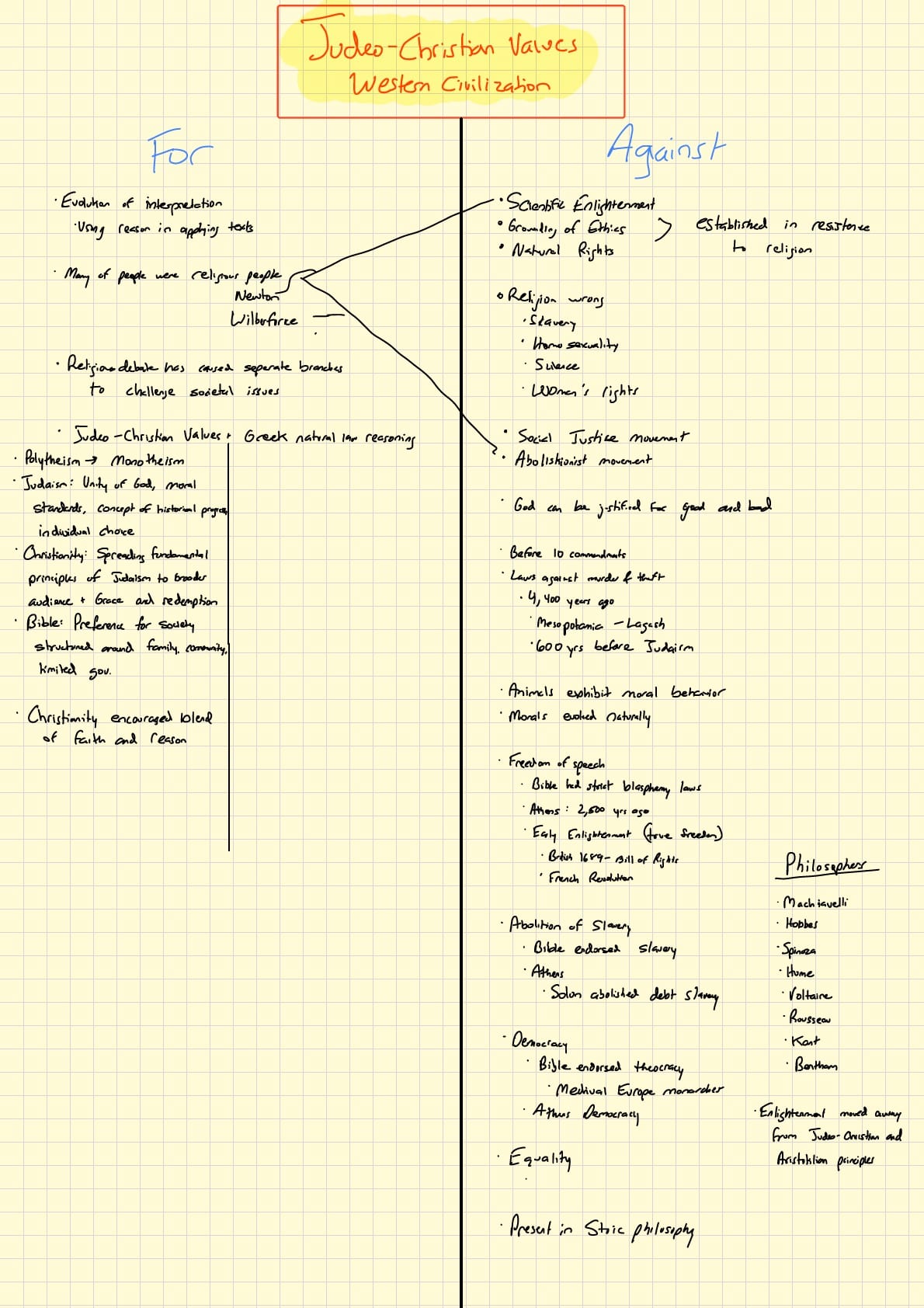
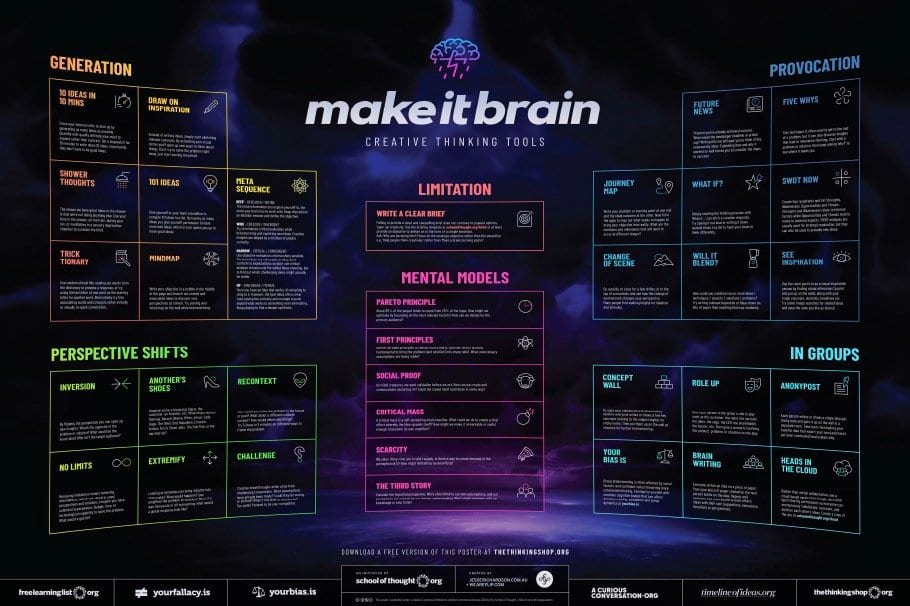
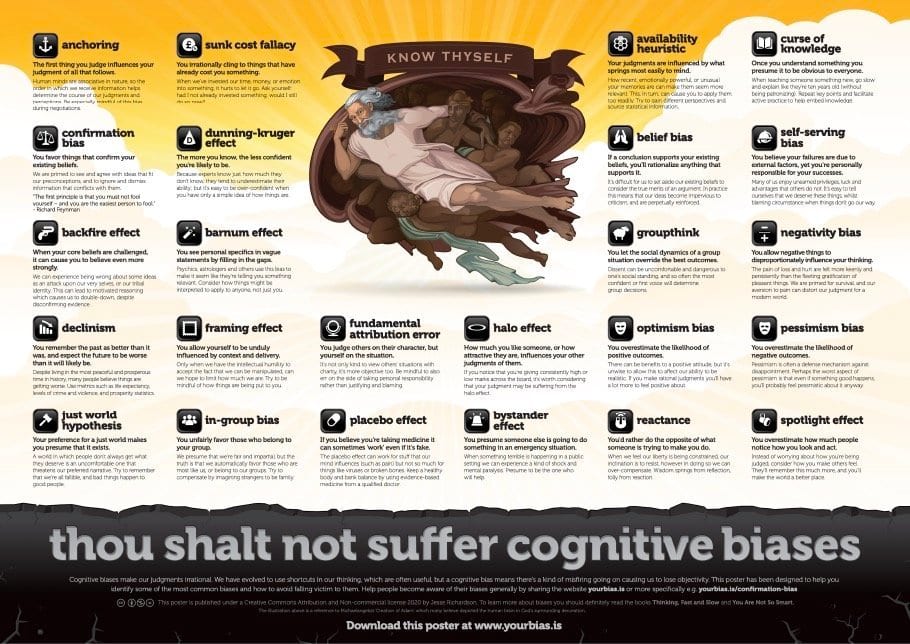
Legacy Index Pages
Older index notes, kept for their auto-generated file lists & embeds:
- 60.10 Argumentation (bk) — original folder note (full Waypoint file tree)
Handwritten Notebook Pages
Source
- Open Argumentation notebook pages — start at notebook p. 41 (file not included in this release)
- Open Argumentation notebook pages — start at notebook p. 65 (file not included in this release)
- Open Argumentation notebook pages — start at notebook p. 95 (file not included in this release)
- Open Argumentation notebook pages — start at notebook p. 104 (file not included in this release)
- Open Argumentation notebook pages — start at notebook p. 162 (file not included in this release)
- Open Argumentation notebook pages — start at notebook p. 186 (file not included in this release)
Base index
Argumentation.base (file not included in this release)
-
Books
-
Written Debate - History, Famous Exchanges, and a Practical Method
Filed captures and working notes — October 2026
Argument structure, rhetoric and claim distinctions
- Agitprop — preserved working note or source capture
- Andrew Wilson argument analysis — preserved working note or source capture
- Cheap Tactics of Social Justice Warriors — preserved working note or source capture
- Moral Argument — preserved working note or source capture
- Prescriptive & Descriptive Claims — preserved working note or source capture